
The Kill (1982) by Alan Ryan
Community vs. Disintegration
Readers unfamiliar with The Kill may wish to read my note only after reading the novel.
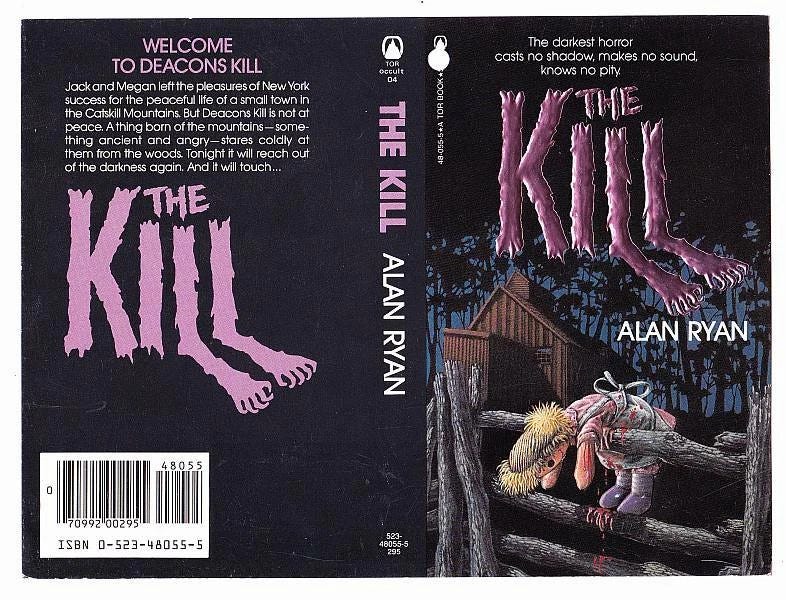
Alan Ryan’s 1982 novel The Kill is a masterwork of atmospheric horror that stands as a quintessential example of the "small-town-under-siege" subgenre that dominated the early 1980s. While many horror novels of this era relied on visceral shocks or high-concept monsters, Ryan focuses on the slow-burn disintegration of a community and the restorative power of human connection. At its heart, the book is a testament to the idea that a community’s greatest defense against the supernatural is not weaponry or ancient lore, but the simple, profound bonds of friendship and a shared sense of place.
A New Life in Deacons Kill
The story follows Megan Todd and Jack Casey, a young, professional couple from New York City who are disillusioned by the hollow, frantic pace of the publishing industry. Seeking a fresh start and a sense of permanence, they impulsively move to Deacons Kill, a quiet, isolated town in the northern Catskills. They lease an old farmstead from an acquaintance, intending to transition into lives as freelance creators—Megan as an artist and Jack as an editor and writer.
However, Deacons Kill is a place where the landscape itself seems to hold a grudge. The novel begins with the disappearance of a young girl, Carla Helbig, and the tension escalates when a visitor at a housewarming party, a girl named Candy, is brutally and inexplicably murdered by an invisible force on a hill known as Deacons Rise. As Jack and Megan settle into the rhythms of rural life, they find themselves drawn into a mystery involving an ancient, "stony" entity that views the town as its personal hunting ground—its "kill."
