
First Light (1989) by Peter Ackroyd
As above, so below
Readers unfamiliar with First Light may wish to read my notes only after reading the novel.
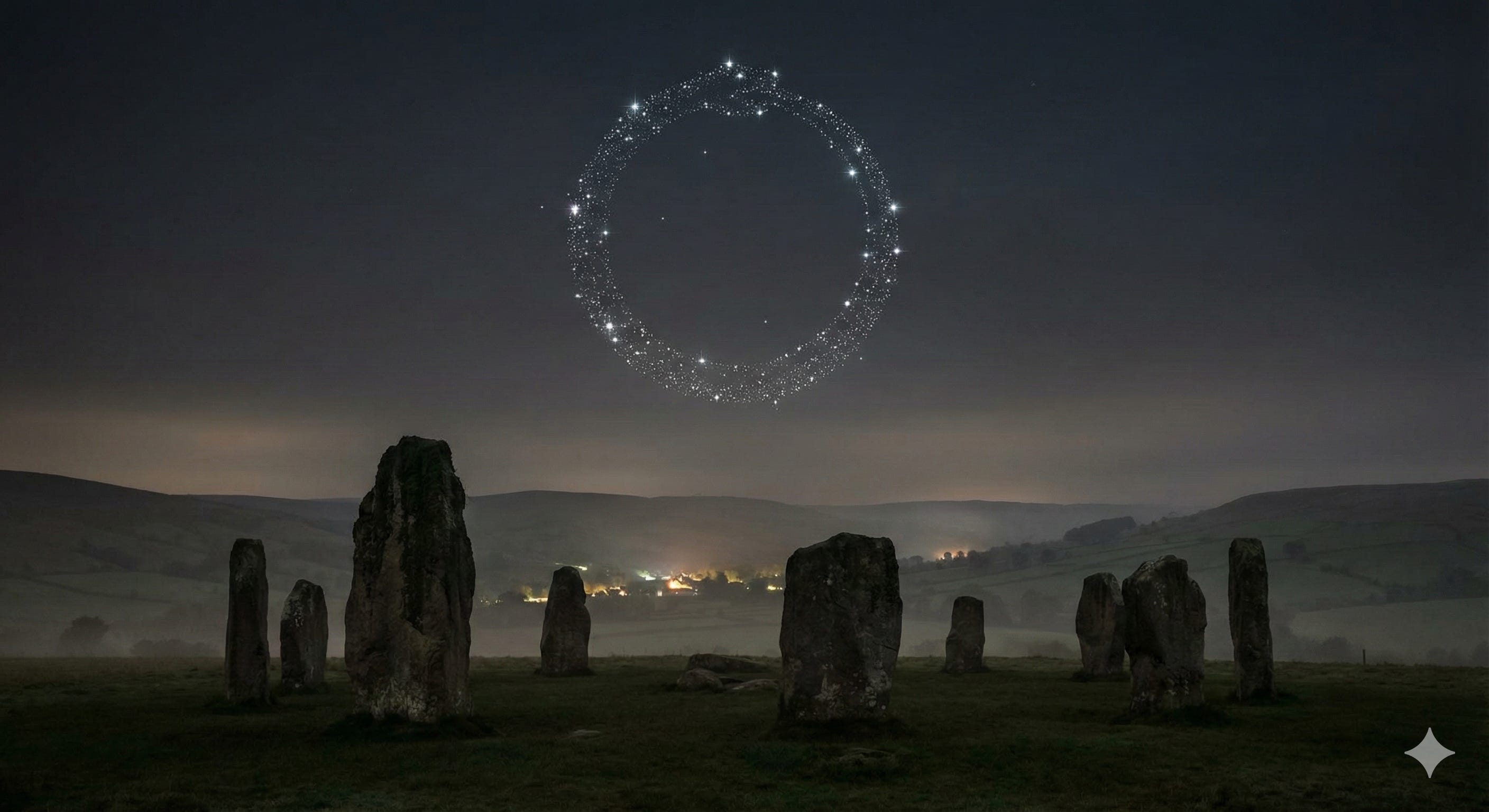
Peter Ackroyd’s First Light is a novel of vertigo. It is a story that forces the reader to look down into the damp, suffocating depths of the Dorset earth, and simultaneously up into the freezing, void of the cosmos. In doing so, Ackroyd constructs a pastoral mystery that operates on the Hermetic maxim "As above, so below," braiding cosmic horror and folk horror into a consciously modern, yet ancient, narrative tapestry.
To call First Light merely a mystery or a horror novel is to undercut its ambition. It is a "Condition of England" novel masq1uerading as a Gothic thriller. Set in the lush, haunting landscape of the Pilgrim Valley, the narrative oscillates between two poles: the archaeological dig led by the earnest Mark Clare, and the Holblack Moor Observatory presided over by the neurotic astronomer Damian Fall, where a survey of Aldebaran and its neighbors is proceeding.
The genius of Ackroyd’s structure lies in his manipulation of narrative distance. He alternates between a grounded third-person past tense—which chronicles the social maneuvering and bureaucratic absurdity of the archaeological dig—and a frantic, immediate present tense that often slips into the second person or deep interior monologue. This technique destabilizes the reader, mimicking the disorientations of the characters. We are pulled between the slow, methodical uncovering of the past and the terrifying immediacy of a universe that is watching us back.
At the earthly pole, we have the excavation of a Neolithic tumulus. Here, Ackroyd deploys the tropes of folk horror with virtuoso skill. The valley is not empty; it is watched by the Mint family, farmers whose lineage seems to stretch back to the Bronze Age. The Mints are chthonic guardians, eccentric and uncomfortably organic, representing a continuity of English life that predates and mocks modern science. As Mark Clare digs to uncover the "Old Baron"—the figure buried within the mound for 2,500 years—he is not just uncovering bones, but waking a dormant figure of narrative.
